
AJ Sonnenberg is a Senior Project Manager at U.S. Engineering Construction.
Construction
Featured
What a 2D Drawing Can't Tell You
August 6, 2026
AJ Sonnenberg
A drawing shows you what a job is supposed to look like. It doesn’t tell you how to execute it.
That gap, between what’s on paper and what happens in the field, is where projects run into trouble. Closing it before work begins is what project management is about.
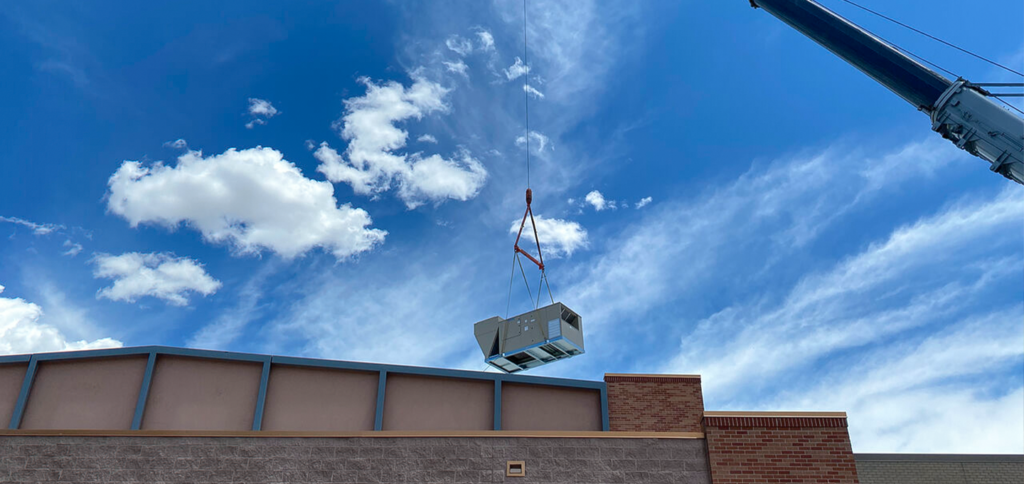
I’ve worked on several RTU swaps in active facilities, often as Mechanical Prime. When bidding and planning this work, I focus on the site logistics that aren’t obvious on a 2D drawing. I try to visualize the work in detail: what challenges we’ll face, how they’ll affect the schedule, and how we’ll solve them.
That visualization follows the same framework on every job. It comes down to three categories of questions: logistics, design, and risk.
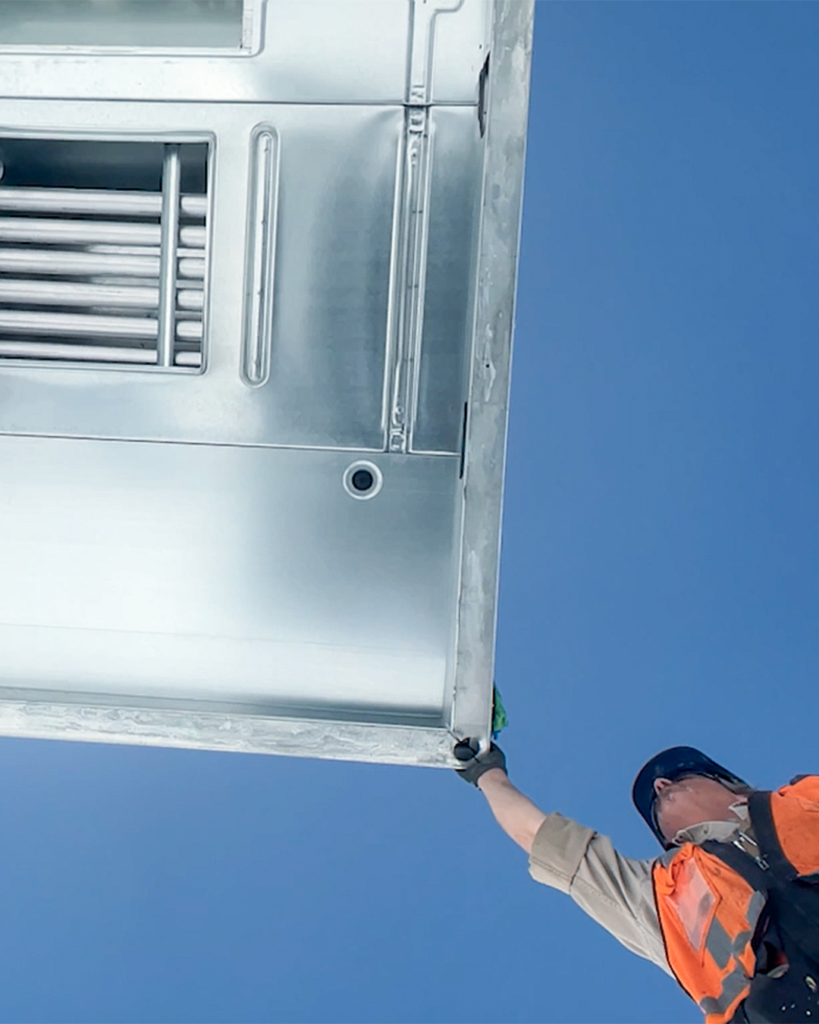
Logistics: Will the space remain occupied? Is temporary heating, cooling, or humidification required? Are there noise, cleanliness, access, or off-hours restrictions? How will materials get to the work area? If roof penetrations or equipment removals are involved, how much can we complete each day while still leaving the roof watertight overnight?
Design: Does the new unit weigh more than the existing one? Is structural review or reinforcement needed? Do electrical and controls scopes align with the mechanical design and the owner’s expectations?
Risk: Are there tight shutdown windows? Can we restore basic operations before full commissioning? Is procurement or lead times a threat to the schedule?
These questions don’t change with the size of the job. An RTU swap asks them. So does a $29 million multi-phase build.
Large projects: same thinking, more formal process
Large projects require the same basic thinking, but the process is more formal and structured. Notices, MOPs, schedules, documentation, and approvals carry more weight. On a small job, a schedule change may be handled through an on-site conversation; on a large project, it typically requires a more formal process.
Large projects also rely more heavily on buyout procedures, VC/MX workflows, defined roles, and clear communication between office and field teams. Smaller projects often depend more on the PM and superintendent covering multiple responsibilities directly.
Matching the process to the scope
The process must fit the scope. It doesn’t make sense to involve purchasing or VC on a $5,000 project. On smaller jobs, the best approach is often to give the field team the information and authority they need to move quickly.
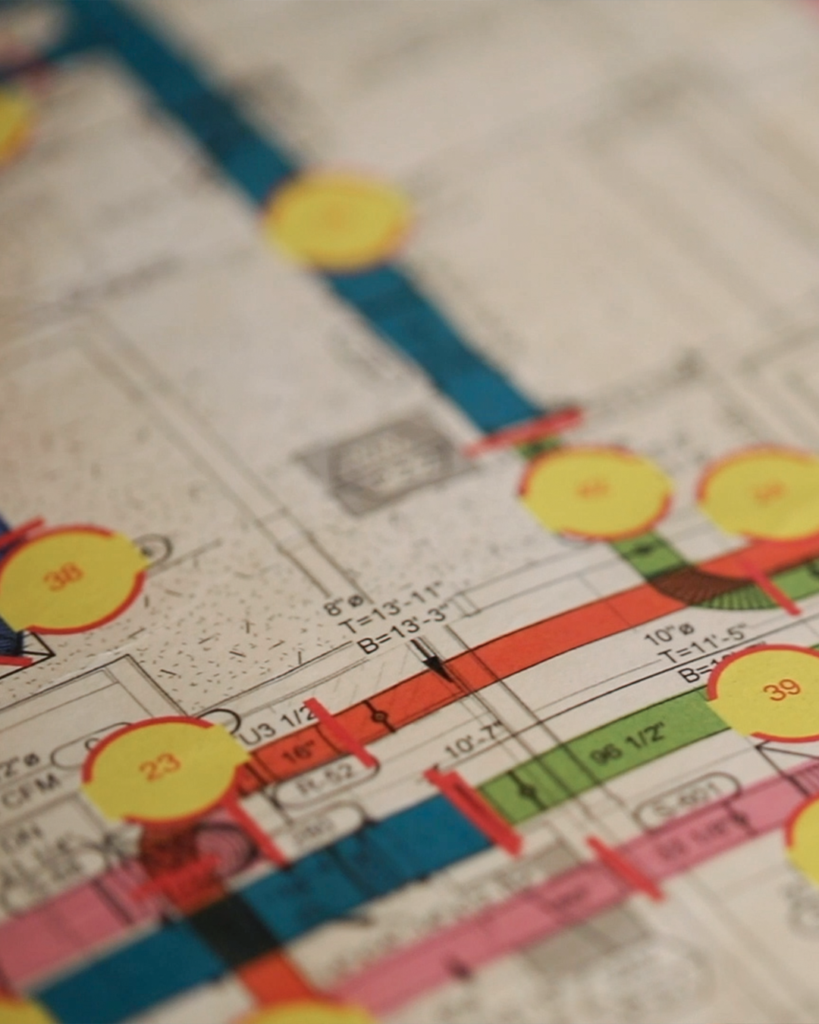
With larger projects, organization, communication, and documentation become much more important. That said, I’ve also been on projects where a coordinated model wasn’t required, but we chose to use VC/MX because it gave the field team a clear advantage.
The judgment call is recognizing which level of process a given job actually needs and being willing to apply it even when the contract doesn’t require it.
What mechanical systems knowledge actually does
Strong mechanical experience helps in two main ways. First, it allows you to reach solutions faster because you know what has and hasn’t worked before. Second, it helps identify risk early during bidding and project execution.
Submitting early RFIs with clear explanations or proposed alternatives can prevent larger issues later and helps establish USE as a trusted trade partner.
Both outcomes, faster problem-solving and earlier risk identification, trace back to the same discipline: seeing the job clearly before the work starts.
When the constraint is the client’s schedule
One example was an office HVAC upgrade for an executive area where the client required zero interruption during the work week. The project included new fan coil units, electrical upgrades, controls, ceilings, and wall repairs.
We phased the work so old and new systems could operate together and completed all work on weekends. Each Friday evening, we protected finishes and removed ceiling tiles. Saturday and Sunday were used for demos and installation. By Sunday night, we reinstalled ceilings, removed protection, and professionally cleaned the space. By Monday morning, the office was back to normal with no disruption. We repeated this process over several weekends until the project was complete.
That sequence was only possible because we understood the systems well enough to know what was achievable in a weekend window and had thought through every constraint before the first Friday.