
Kristin Blundell is Director of Preconstruction at U.S. Engineering Construction.
Construction
Thought Leadership
The Work Between the Work: Turning Good Working Relationships into Long-Term Partnerships
June 17, 2026
Kristin Blundell
Winning repeat work is about more than delivering well. It’s about what teams do in the quiet stretch after a project closes: the debriefs, the restructured pricing sheets, the standing check-ins no one required. The teams who keep getting called back aren’t just the ones with strong track records. They’re the ones who treat the end of a project as an opportunity to get better at the next one.
That discipline (reflection, refinement, and deliberate change) turns good working relationships into great long-term partnerships.
The Temptation to Take the Win and Move On
When a project ends well, the instinct is to jump to the next. Take the win, maintain the relationships, and bring the same energy to the next pursuit. That instinct isn’t wrong, but it’s incomplete.
Momentum is most valuable when you examine it. What drove the outcome? Where did coordination feel effortful when it should have been automatic? What would the team do differently if they could start over? Those questions are easy to skip when everyone is busy and the last project ended without incident. But skipping them means arriving at the next pursuit the same team you were, rather than a better one.
The most competitive partnerships we’ve seen are built in those gaps. Not during the project, but after it. In debrief conversations that feel optional. In the willingness to hear that something could be better, and the discipline to actually change it.
What Refinement Actually Looks Like
Reflection without follow-through is just a meeting. What makes post-project investment meaningful is the changes it produces, and those changes don’t have to be dramatic to matter.
After completing preconstruction work on the University of Colorado Boulder Chemistry and Applied Mathematics project, for example, we sat down with Adolfson & Peterson Construction and Cator Ruma & Associates to ask honest questions about where our coordination, pricing visibility, and communication could improve. The answers shaped concrete process changes: monthly check-ins with Cator Ruma to maintain tighter alignment through each project phase; page-flip sessions to ensure our pricing reflected a complete picture of issued documents and upcoming scope; restructured pricing sheets that broke out materials, labor, and total cost of work in response to a direct ask from Adolfson & Peterson for clearer budget visibility.
None of it required significant resources. What it required was the willingness to treat feedback as a design problem and follow through on the solution.
Together, those refinements created more consistent review processes, cleaner handoffs between phases, and stronger alignment before construction ever began. More importantly, they changed the nature of our relationships, moving from teams that had worked well together to teams that had actively invested in how they worked together.
Why This Is a Pursuit Strategy, Not Just Good Practice
That investment has a direct competitive outcome. When the Colorado State University Law Engineering Future Technologies Building came to pursuit, we weren’t starting from scratch with our partners. Adolfson & Peterson and Cator Ruma had already seen us respond to feedback, follow through on process changes, and enter the project differently than we had the last one. The trust that made us competitive was built before the pursuit started.
That matters especially on complex work. The CSU project involves highly intricate systems, utility tunnel tie-ins, and coordination around an active telecom infrastructure that needs to remain operational throughout demolition and phased construction. There isn’t room on a project like that for teams to figure out how they work together. That foundation must exist already.
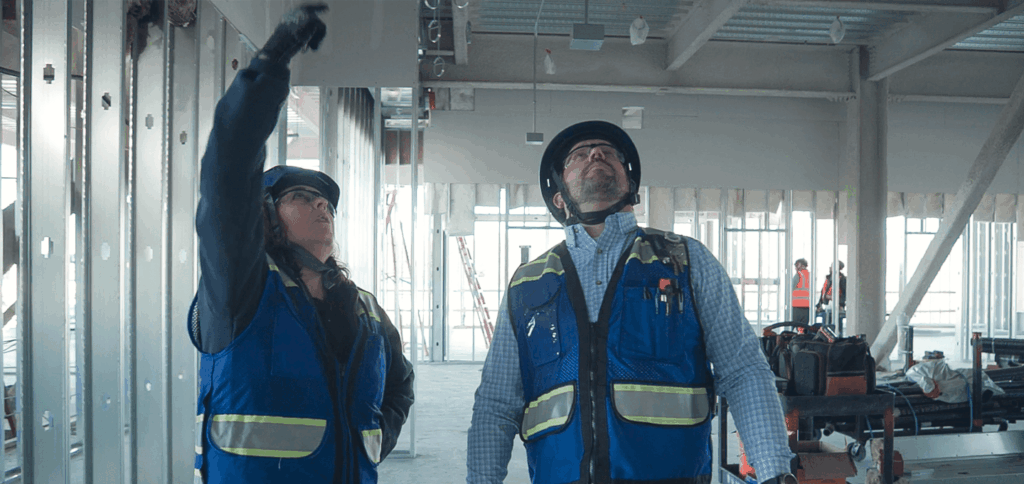
Because it did, our Preconstruction, Operations, and Field Teams came in with a shared language and clear lines of ownership. We were working alongside our partners from the earliest feasibility studies, reviewing existing conditions, identifying site challenges, and planning around active campus operations. Early site walks with excavation and shoring subcontractors helped surface logistical challenges before they became field problems. That level of integration, from early budgeting through constructability discussions and into execution planning, was possible because we had invested in it before the pursuit started.
The Compounding Value of Teams That Keep Working on It
There’s a version of partnership that looks strong because the projects go well. And then there’s the kind that goes well because the teams keep working on it: in the gaps, after the punch list is closed, in conversations that are easy to skip when the last project ended without incident.
The difference compounds over time. Each honest debrief, each process change, each standing check-in adds to a foundation that makes the next project easier to win and better to execute. Treat the relationship as something worth improving, not just maintaining. That’s how trust becomes a competitive advantage, and how partnerships become the kind that lasts.