
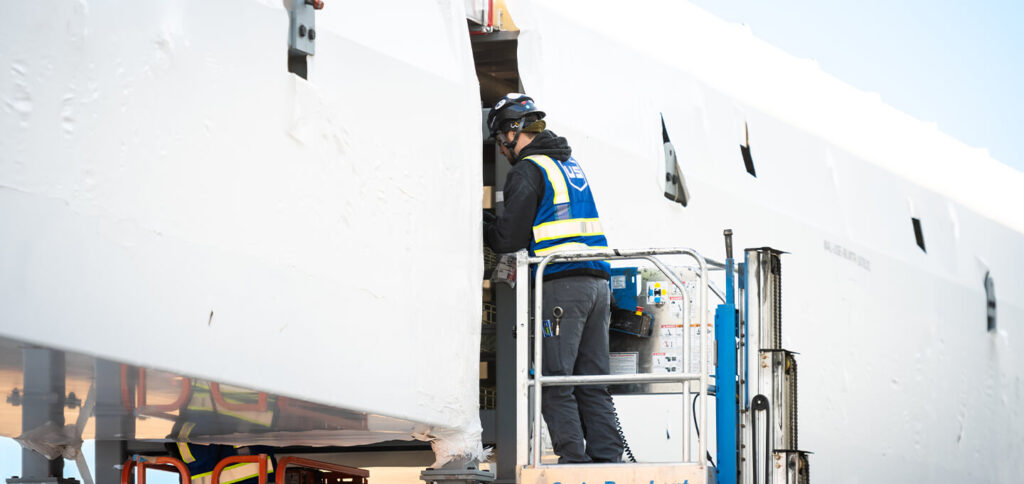

As the construction landscape changes rapidly, and speed-to-market becomes increasingly important, Design for Manufacturing and Assembly (DfMA) offers a practical way to bring clarity, consistency, and speed to complex projects.
At U.S. Engineering Innovations, the DfMA team adopted this approach long before the recent market demand accelerated. That early commitment gave us a head start in developing the processes, facilities, and partnerships needed to deliver DfMA at scale.
DfMA isn’t just another name for prefabrication. It’s an intentional process that applies manufacturing principles to construction and begins at the earliest stages of design. When our team is engaged early, we can identify scopes that are either inherently repeatable or could be standardized, even when clients haven’t previously considered modularization.
The approach includes standardizing assemblies, improving constructability, and shifting significant portions—or all—of the mechanical scope into manufacturing facilities. These environments offer consistent conditions, predictable workflows, higher quality, and the ability to perform testing, QA/QC, validation, and even commissioning activities that are difficult to match in the field.
Who Benefits Most from DfMA?
Not every project is suited for DfMA, but for many, the approach delivers significant value. Projects with these conditions see the strongest results:
- Repeatable builds. Data centers, central utility plants, healthcare facilities, and laboratory environments—anywhere similar mechanical designs appear across multiple sites.
- Labor-challenged regions. Markets where skilled labor is limited benefit from shifting technical work into fabrication facilities, where stable staffing, tooling, and QA/QC are already in place. That shift enables local field teams to install high-quality, premanufactured systems without requiring specialized fabrication expertise on site.
- Aggressive schedules. Projects with tight timelines that can’t absorb site delays, rework, or slow stick-build installation. Because DfMA production occurs independently of site conditions, it provides schedule resilience. Even when predecessor activities slip on site, our assemblies continue moving forward.
These projects succeed when owners, designers, and builders commit to a unified process. DfMA works best when teams engage early, model with purpose, and maintain clear coordination through installation.
Why Use DfMA?
The advantages of DfMA extend well beyond schedule gains. For owners, designers, and contractors, the value continues across the life of the facility.
- Efficiency in design. Standardization reduces hundreds of unique configurations into a manageable set of assemblies, simplifying coordination and improving reliability.
- Quality and safety. Manufacturing takes place in controlled environments with consistent lighting, tooling, inspection processes, and ergonomic workspaces. The result is higher-quality welds, connections, and finishes, paired with detailed documentation and reduced exposure to site hazards.
- Schedule certainty. When managed as a dedicated scope, DfMA assemblies regularly achieve on-time delivery rates above 98 percent. Predictable milestones support stronger planning and minimize field uncertainty.
- Labor resilience. As skilled labor shortages continue, manufacturing facilities create stability. Shops are optimized for efficient workflows, and field teams can focus on installation instead of fabrication.
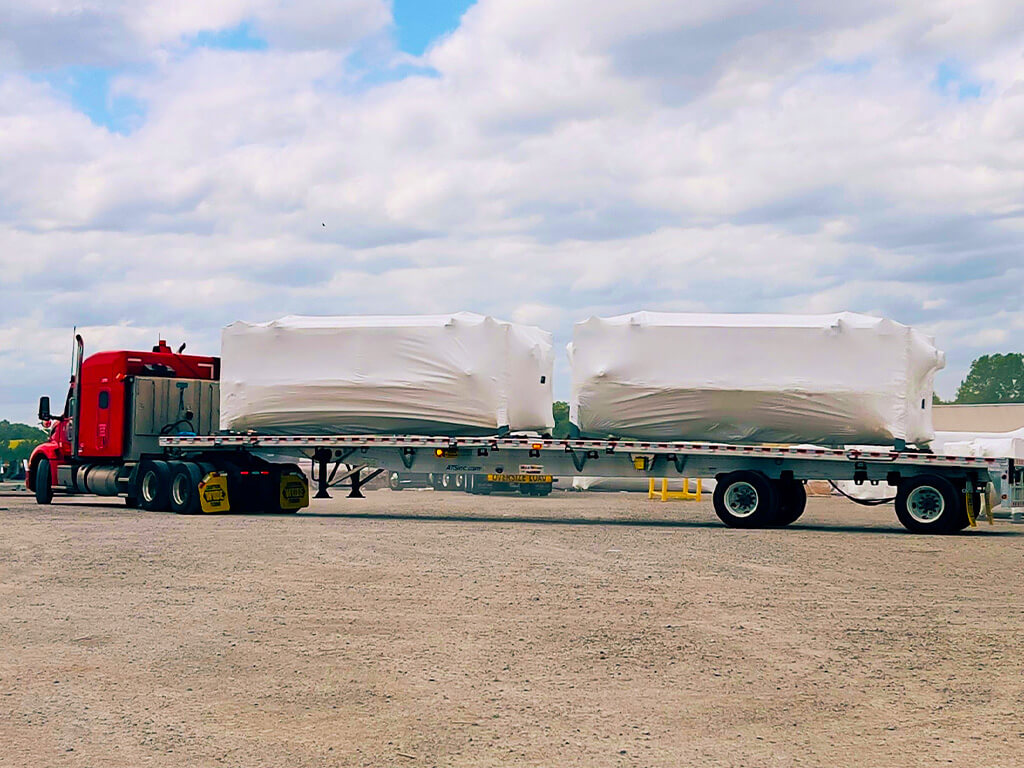
- Logistics support. U.S. Engineering Innovations‘s DfMA group includes a dedicated logistics team that manages inbound and outbound material flow, coordinates delivery windows nationwide, and reduces the burden on site teams.
- Sustainability and reduced waste. Lean manufacturing minimizes material waste and reduces the likelihood of field adjustments, supporting more sustainable outcomes and cleaner installations.
Each of these factors improves the reliability of the mechanical systems and enhances long-term building performance.
Commitment Is Key
DfMA succeeds when teams align early and remain committed to the approach. It requires detailed modeling, clear communication, and thoughtful coordination across disciplines. To ensure that commitment, we give DfMA its own scope, supported by a dedicated team responsible for planning, quality oversight, logistics, and continuous alignment between design and manufacturing.
Every project is an opportunity to build with intention. Use this guide to determine whether DfMA is a good fit for your next project.