
Zach Collins is Director of Operations at U.S. Engineering Innovations.
Featured
Innovations
Offsetting Risk with DfMA
April 1, 2026
Zach Collins

Design for Manufacturing and Assembly (DfMA) has the potential to reshape how complex construction projects are delivered. But most conversations about DfMA focus on the benefits of using it rather than the risks of not using it.
From a leadership perspective, that distinction matters. Project executives and project managers spend a lot of time thinking about risk registers: the issues that could impact schedule, labor availability, coordination, or cost.
When I think about DfMA, I often think about how it offsets those risks.
The DfMA approach moves decisions earlier in the process and gives teams better information sooner. That shift can fundamentally change how projects perform. When teams rely solely on traditional workflows, several risks become significantly harder to manage.
Risk 1: Coordination Breakdowns Start Early
One of the first places traditional workflows tend to break down is coordination.
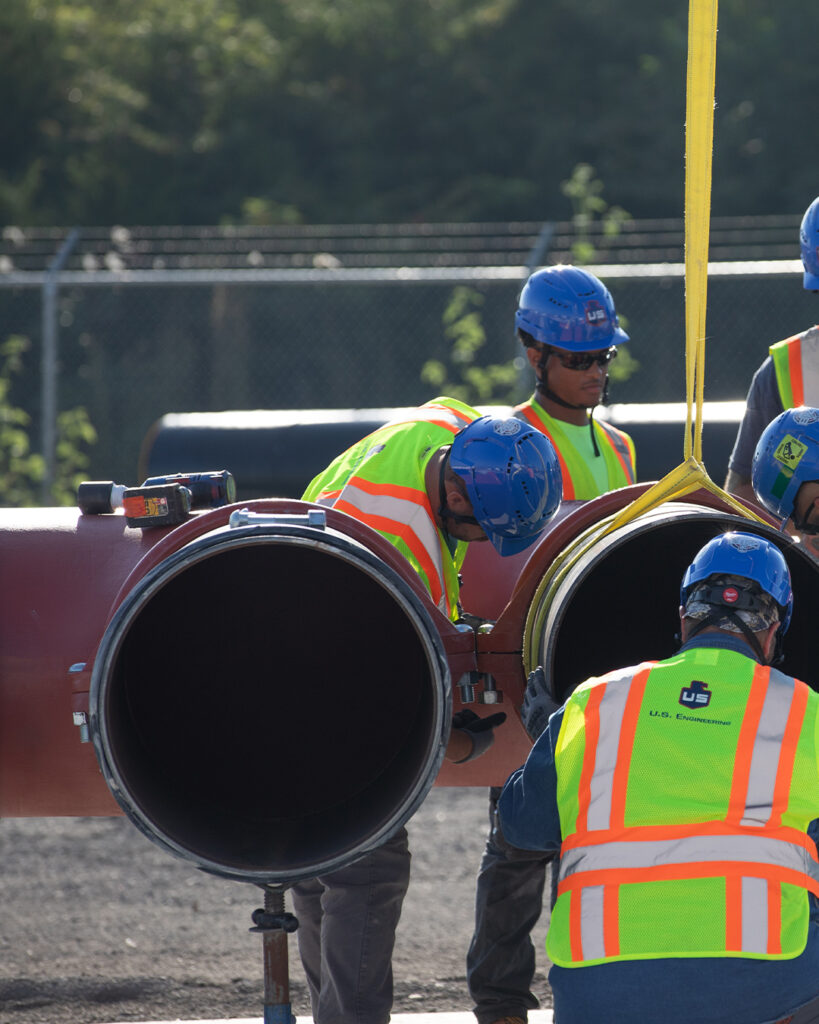
Building Information Modeling (BIM) has become standard across much of the industry, but how coordination is executed still varies widely. Even today, it’s common to see drawings or models that include the instruction to “coordinate in the field.”
That phrase usually means the coordination process stopped short. The schedule didn’t allow enough time to resolve the issue, or the coordination team didn’t have the authority to drive a solution before construction began.
When coordination decisions move into the field, solutions are often driven by immediate constraints rather than long-term performance. Those solutions may work, but they come with compromises. System performance, longevity, and documentation accuracy can all suffer.
DfMA changes that dynamic. By intentionally designing assemblies for manufacturing and installation, teams resolve coordination challenges earlier and reduce the number of unknowns that Field Teams need to solve.
Risk 2: Labor Constraints Hit Harder Without DfMA
The skilled labor shortage continues to challenge the industry. More experienced tradespeople retire each year than new workers enter the field.
In traditional project delivery models, complex work is concentrated at the jobsite. When schedules tighten, the common response is to increase the number of workers assigned to the same space. But productivity doesn’t scale indefinitely.
The more people placed into a confined space, the less efficient each person becomes. Congestion increases, coordination becomes harder, and safety risks rise.
Even when teams use traditional prefabrication, the benefits of parallel production aren’t fully realized. Work may shift offsite, but without a DfMA approach, it doesn’t scale or reduce labor pressure to the extent it could.
DfMA shifts work into controlled fabrication environments. In those settings, production processes can be standardized, repeated, and optimized.
Risk 3: Quality and Safety Are Harder to Control in the Field.
There’s a fundamental difference between performing work in a fabrication shop and performing it in the field.
In a shop environment, crews work with stable materials, controlled weather conditions, and equipment designed to position assemblies for precise work, leveraging industrial ergonomics. In the field, conditions are rarely ideal. Crews may be working high off the ground, in tight spaces, or in environments affected by weather and site constraints.
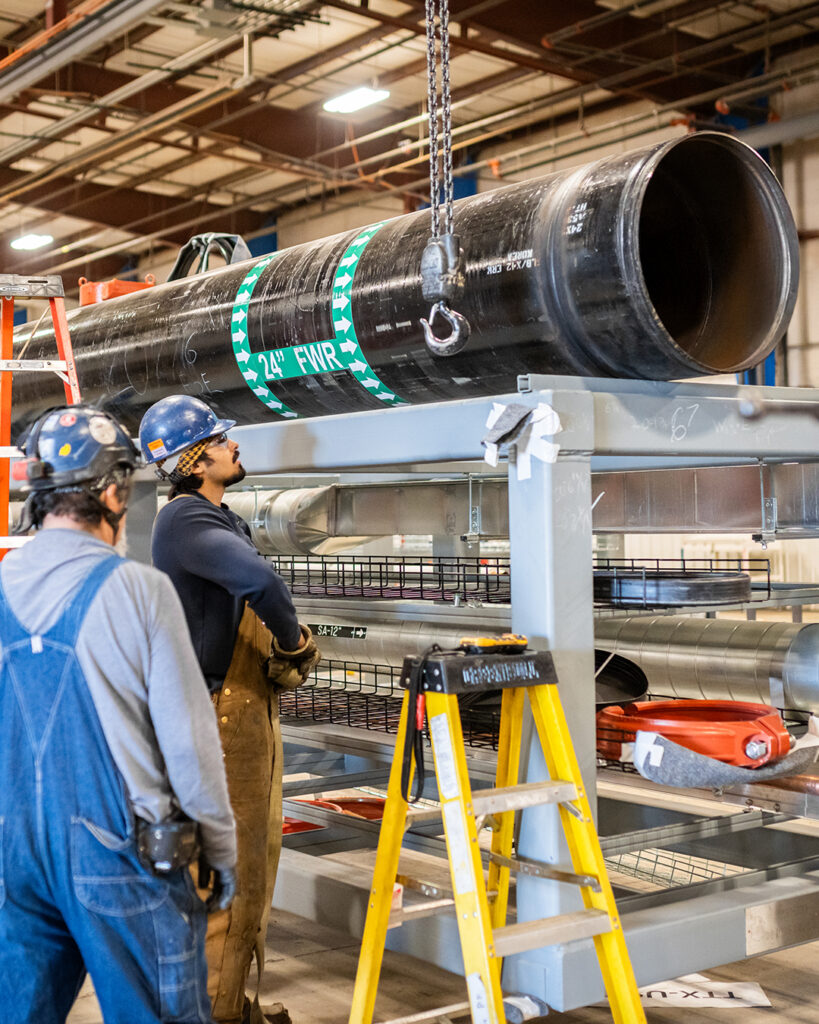
Without DfMA, much of the work that could be completed in controlled environments remains exposed to those variables. Moving more of that work offsite improves both quality and safety outcomes.
Risk 4: Inefficiency Causes Costs to Escalate
Traditional construction workflows often introduce inefficiencies that compound over time.
Rework, downtime between trades, and inconsistent sequencing all contribute to cost escalation across the life of a project. DfMA applies a manufacturing mindset to project delivery, standardizing assemblies and planning installation sequences earlier, so teams reduce waste and improve first-time quality.
Another area where costs escalate is supply chain management. DfMA helps offset this through early, high-detail planning that enables accurate material counts and bills of materials for bulk purchasing with minimal waste. This approach, which is often applied to long lead equipment can also extend to commodities, supporting more dependable deliveries and reducing backorders.
Risk 5: Organizations Lose Ability to Scale
When organizations avoid DfMA, the risks extend beyond individual projects.
Many owners build programs rather than single facilities. Data centers, healthcare networks, laboratories, and other sectors often involve multiple projects within similar system requirements.
Without a DfMA approach, every project essentially starts from scratch. Design work is duplicated, coordination efforts are repeated, and opportunities to standardize systems are lost.
That also makes forecasting more difficult. Owners have less visibility into long-term capital planning, contractors struggle to forecast labor demand, and equipment manufacturers receive less predictable purchasing signals.
DfMA enables a more programmatic approach. Standardized assemblies and repeatable systems improve forecasting, coordination, and long-term planning.
Building Bigger and Faster
The construction market is increasingly defined by large, fast-moving projects.
From advanced manufacturing facilities to hyperscale data centers, many projects involve enormous capital investments and aggressive delivery timelines.
As projects grow and become more complex, the risks associated with traditional delivery methods grow even faster. DfMA provides a way to manage that complexity.
Teams that adopt these principles can deliver projects with stronger schedule performance, higher quality outcomes, and safer job-site conditions.