
Tom Poeling is Director of Energy & Sustainability at U.S. Engineering Service. For inquiries, please reach him at tom.poeling@usengineering.com.
Service
Sustainability
Kansas City Climate Action Plan: What It Means for the Built Environment
January 26, 2026
Tom Poeling

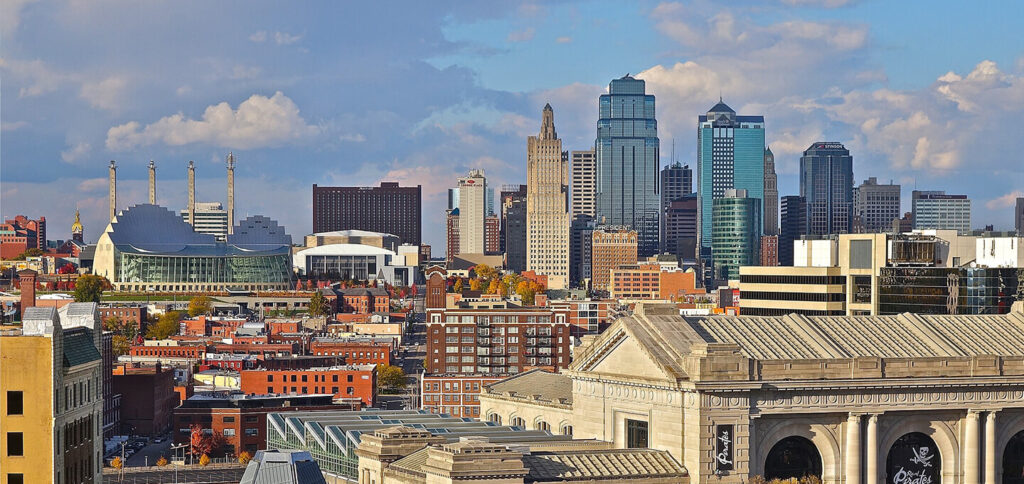
Kansas City’s Climate Action Plan sets a regional roadmap for reducing greenhouse gas (GHG) emissions while improving public health, economic resilience, and building performance. Developed through voluntary collaboration among local governments, industry partners, and community stakeholders, the plan outlines how the built environment will play a central role in meeting long-term climate goals.
For U.S. Engineering Service, the plan reinforces the importance of early planning, measurable performance, and practical solutions that help us guide customers toward what’s ahead.
The Big Picture
The plan applies to the eight-county Kansas City Metro region served by the Mid-America Regional Council (MARC).
Regional targets:
- Reduce economy-wide GHG emissions 26% by 2035 (from a 2023 baseline)
- Creation of benchmarking and building performance programs for existing buildings by 2030.
- Achieve net-zero emissions by 2050
Emissions today come primarily from transportation and buildings, making the commercial building sector, where we operate, one of the fastest and most cost-effective areas for reduction.
Why Buildings Matter
Scenario modeling shows that without action; regional emissions will continue to rise. Only aggressive building-focused strategies that combine efficiency, retrofits, and cleaner energy will put the region on track for meaningful reductions.
Key building strategies include:
- Improving energy efficiency through updated building codes and performance standards
- Retrofitting existing commercial buildings to reduce electrical and thermal energy use
- Expanding commissioning and retro-commissioning practices
- Increasing electrification where it makes sense
- Supporting a cleaner electrical grid over time.
These approaches reduce emissions while improving indoor air quality, system reliability, and long-term operating costs.
How U.S. Engineering Service Supports Clients
U.S. Engineering Service helps building owners act today while preparing for future requirements through:
- Energy audits and building assessments
- Controls optimization and commissioning
- Testing, Adjusting, and Balancing (TAB)
- Mechanical retrofits and capital planning
- Ongoing performance monitoring.
- Owner advocacy and training related to new regulations
These services allow clients to move beyond compliance toward smarter, more resilient building systems.
What’s Next
The final Climate Action Plan is expected in August 2026, with expanded benchmarking programs, building performance standards, and code updates likely beginning as early as 2026-2027.
Staying ahead of these changes will require coordination, data-driven decisions, and trusted technical partners. A focus on building performance and early planning will help owners reduce risk and adapt as policies and expectations change.