
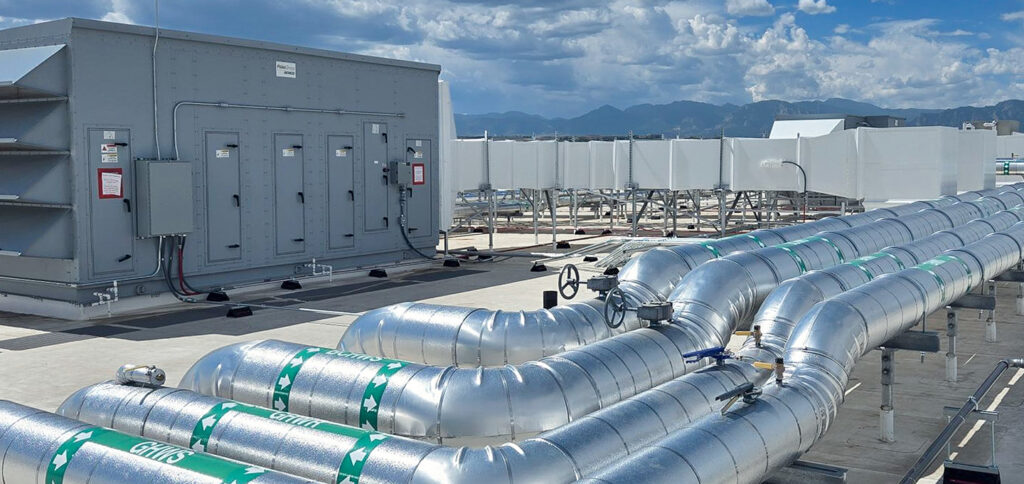
The mechanical scope now carries challenges we didn’t see a decade ago. Codes evolve mid-stream, electrification changes, equipment demands, security requirements, limited access, and facility expectations grow more technical each year. Owners and general contractors need partners who do more than respond to these shifts. They need teams who plan ahead, build smarter, and create predictability long before installation begins.
That combination, foresight, and fabrication is becoming essential. And it shaped every decision U.S. Engineering Construction made on the Honeywell Expansion our Rocky Mountain Team completed.
What Happens When Change Shows Up Early
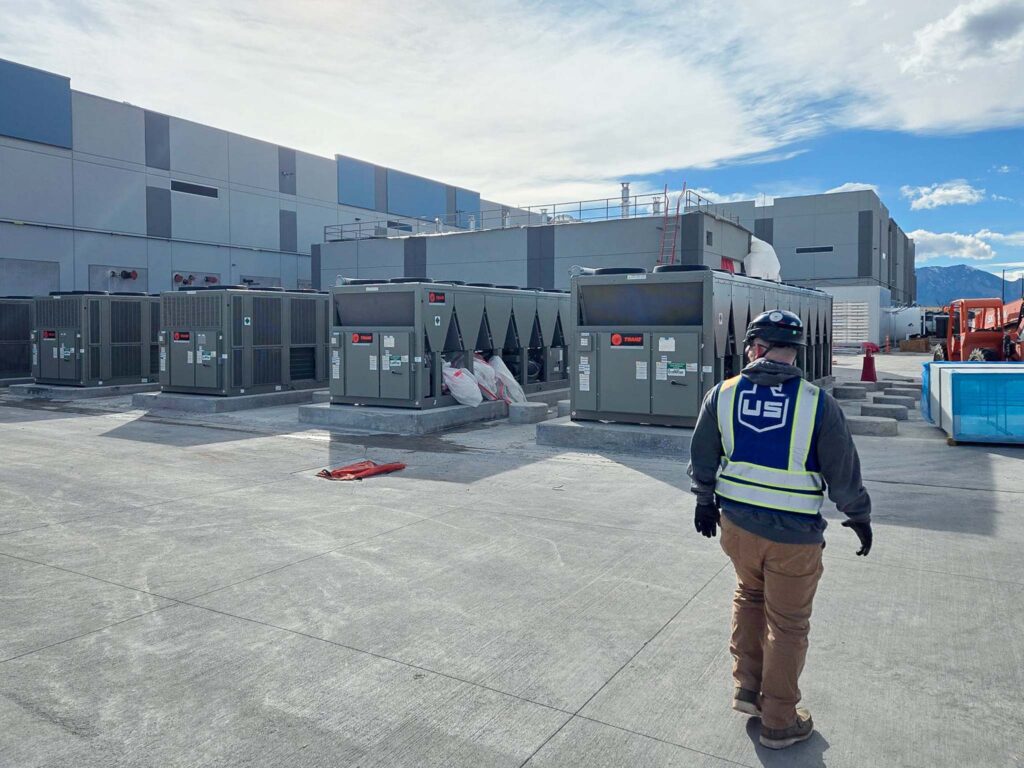
This project faced a year-long permitting delay. Major components we built early sat in storage far beyond their original timeline. Because the assemblies came out of a controlled fabrication environment, we had confidence in the quality, even after extended storage. We stayed close to our vendors, assessed warranty options for equipment, and delivered the equipment just in time once the site reopened.
In today’s environment, that kind of resilience matters. Projects don’t pause cleanly. Conditions shift while the work is underway. Fabrication helped us bridge the gap and protect the schedule.
Security, Constraints, and the Need for Better Solutions
A major feature of this project was a 32,000-square-foot SCIF (Sensitive Compartmented Information Facility), an environment that requires precision from every trade. Our Team Members and subcontractors needed background check clearance. Only paper drawings could enter with no form of electronics allowed. Systems required RFP shielding, grounding, wave guides, man bars, and other components that eliminated vulnerabilities from potential outside infiltration.
On top of that, the mechanical room was undersized, and the structure required reinforcement for roof loads due to the building now being utilized for a purpose it was never intended to. These aren’t unusual challenges anymore. They’re becoming the norm.
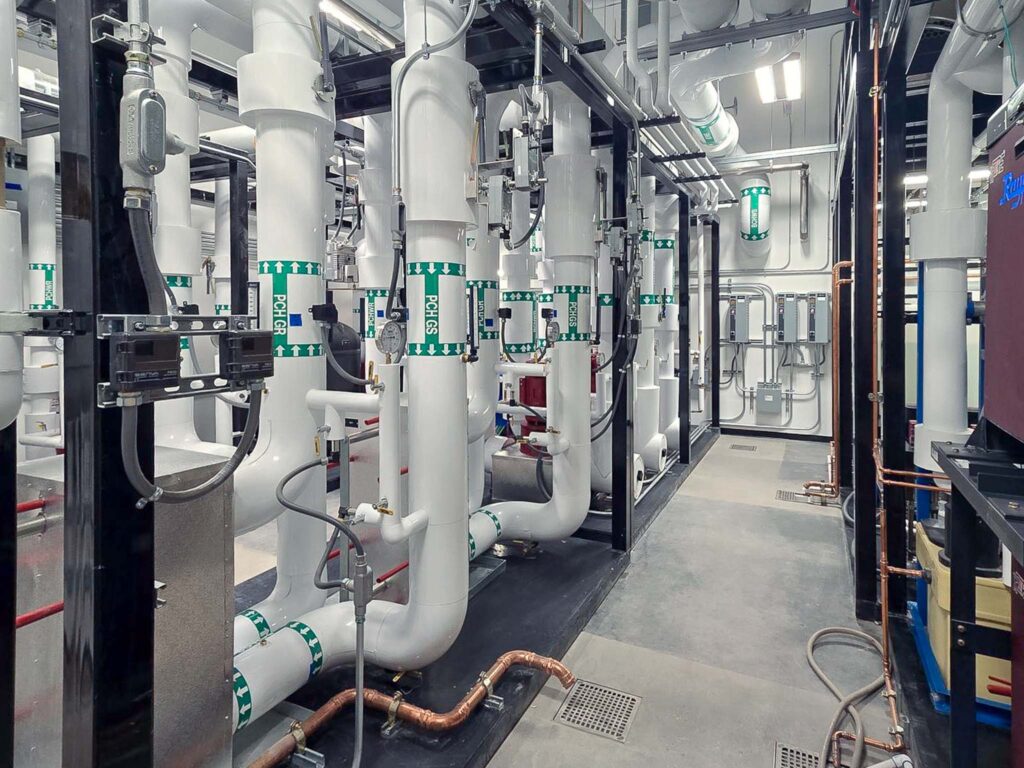
Fabrication helped us meet them directly. The team designed a two-story skid to fit the mechanical room, coordinated large equipment, stands, and racks around 150 mph wind rating requirements and structural additions, and prepared assemblies that would install cleanly once cleared for access.
Staying Ahead of Code and Technology Shifts
Partway through construction, updated building codes removed the ability to use gas fire heating on RTU’s that were already ordered. The team had to adjust quickly to develop a supplemental electric heating strategy. These adjustments affected electrical loads, layout, and coordination.
Changes like this can stall a project if the team isn’t ready. Our approach is to stay ahead of the shifts by keeping communication steady, analyzing impacts early, and adjusting the plan before changes slow the work down.
Fabrication supports that mindset. It pushes design conversations earlier and reduces the risk that a mid-project change turns into a full redesign.
Predictability is the New Standard
Once the delays were lifted, our focus shifted to regaining schedule. Fabrication played a major role again. Working offsite created safer, more consistent conditions for our Team Members. Multi-trade racks tightened coordination and minimized congestion inside restricted spaces.
These workflows brought predictability back to a project that had absorbed multiple disruptions.
Owners and GCs expect predictability. They want partners who can maintain it even when the project environment becomes complicated.
Where Mechanical Work Is Headed
The Honeywell Expansion reinforced what we’re seeing across the industry. The projects are getting more complex. The conditions are changing faster. And successful outcomes depend on a mechanical partner who can anticipate what’s coming, adapt quickly, and build with intention.
Fabrication is a key part of that. So are clear communication and concise planning. Together, they give the entire team a foundation that holds up when the unexpected happens.
This project is a reminder of why our roles matter. We don’t just install systems—we help owners and general contractors navigate change with confidence and deliver facilities built for long-term performance.