

At this year’s MEP Innovation Conference in Austin, conversations centered around a familiar theme, technology. Importantly, conversations around the challenges of incorporating technology shifted from adopting new technologies to how organizations implement adopted technologies to their fullest potential.
Across sessions and roundtables, attendees discussed data, platforms, artificial intelligence, and automation, all topics facing MEP contractors as they look to the future.
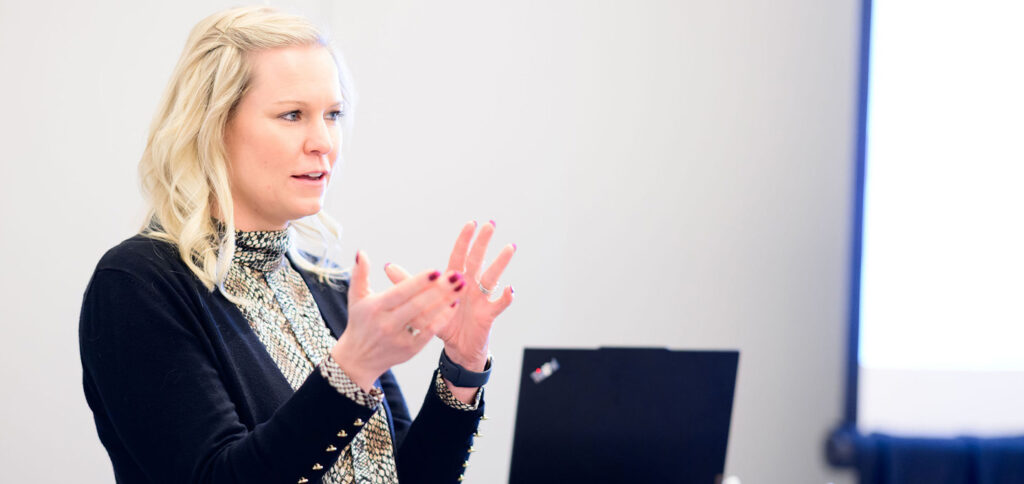
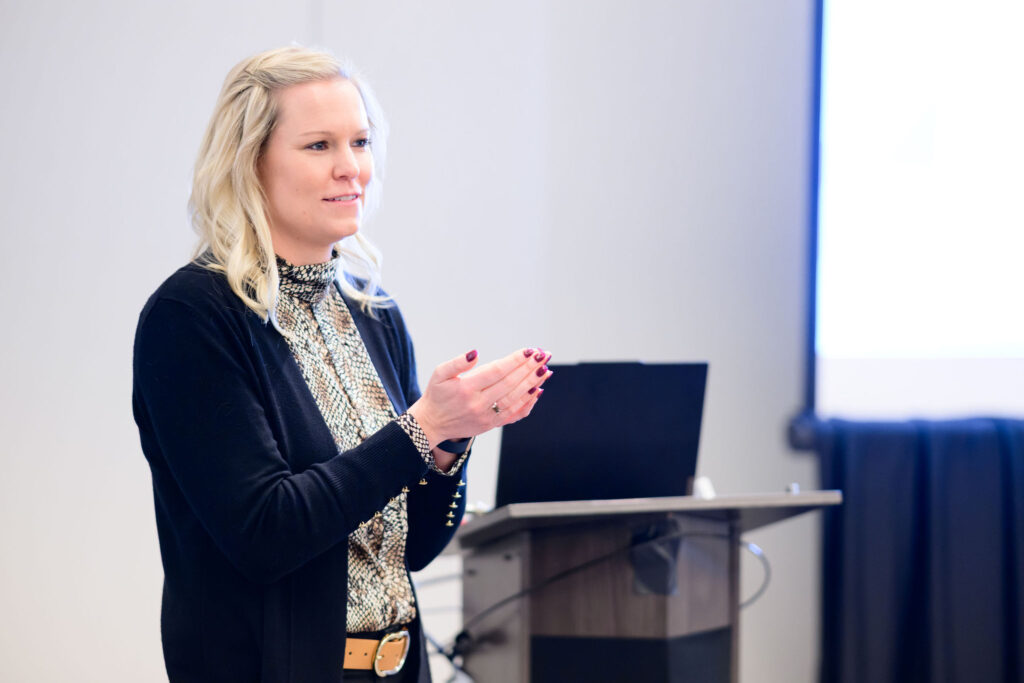
U.S. Engineering Team Members Hannah Thomazin, Risk Manager at U.S. Engineering Holdings, and Lindsay Williams, Vice President of U.S. Engineering Service – Rocky Mountain, each led discussions on the challenges of how to successfully incorporate technologies into operations.
Hannah co-presented “When to Raise the Red Flag” with Bob Snyder III of Binsky Mechanical, exploring how data, technology, and organizational awareness can help teams identify issues early and act before they derail projects. Lindsay hosted the roundtable “No Silver Bullet” alongside Nathan Wood of SpectrumAEC, discussing why service organizations succeed by building an ecosystem of connected technology rather than relying on a single platform.
We interviewed Hannah and Lindsay about their experiences this year in Austin.
What was the main takeaway you wanted attendees to leave with after your presentation?
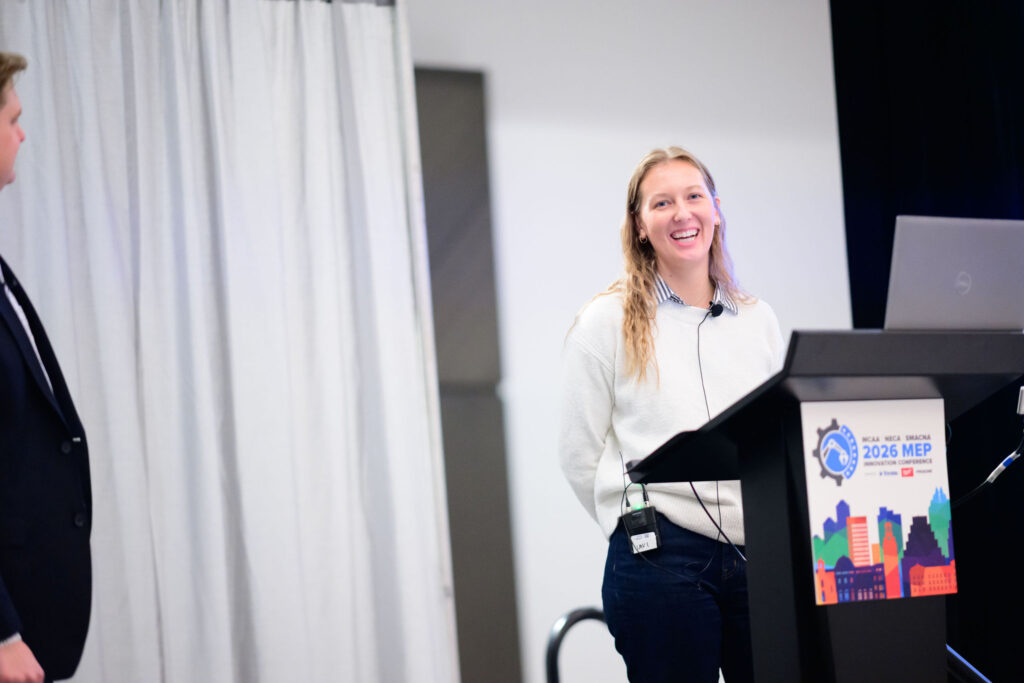
Hannah: I presented with Bob Snyder III from Binsky Mechanical. Because he manages workflows across projects and I work in risk management, our roles interact in a unique way. We look at projects through different lenses but ultimately share the same goal. Together, we wanted attendees to see how data, technology, organizational awareness, and culture come together so organizations can identify issues early and act on them.
Lindsay: I hoped attendees would gain new perspective by shifting their mindset from believing one software platform can solve all their problems to understanding that an integrated ecosystem of platforms is what creates success.
What’s one idea from your presentation that teams could put into practice right away?
Hannah: One immediate takeaway from our breakout session was showing teams how to create workflow process maps and the value they bring. Each lane represents who is responsible, and teams map out the activities together within a process. It’s helpful so everyone understands their responsibilities and why each step must be completed before the next begins. Walking through how to build those maps helps teams clarify handoffs and catch gaps early.
Lindsay: Service leaders can start asking better questions about the purpose of each platform and how it connects to their company’s ecosystem of software and data. Operational platforms, ERPs, and analytics tools all serve different roles, and knowing how they can optimally interact can give you a competitive advantage.
How does your topic fit into larger industry conversations?
Hannah: Many conference discussions focus heavily on technical details like APS’s and KPI’s. Those are important, but what often gets missed is the people’s side. I focused on change management principles using the AKDAR model: awareness, desire, knowledge, ability, and reinforcement, to explain how individuals move through change.
Lindsay: Service technology has evolved significantly. Fifteen years ago, companies relied on ERP systems as their entire technology solution. Today, specialized service platforms exist to provide new levels of operational efficiency, and cloud-based tools provide flexible access to information, giving the workforce more usable data and automation than ever before.
What did you hear or learn at the conference that you’re bringing back to your work?

Hannah: A consistent theme was how technology conversations often outpace organizational readiness. The takeaway reinforced that success depends not just on implementing systems, but on preparing people to adopt them.
Lindsay: AI was one of the major themes at the conference, and I came back with several tools to pilot—particularly around presentation generation, dictation, and documenting SOPs—which feels especially timely given our upcoming software releases. Anything that helps us capture and share information more efficiently is a priority for me right now.
Another key takeaway was the dialogue among contractors with Service organizations. These discussions focused heavily on service operational platforms, digital enablement, and software implementations. Understanding the intricacies of the software companies that are market frontrunners provides valuable context for our own implementation in progress. Exchanging lessons learned around platform adoption, scalability, and operational challenges helps me as a leader anticipate risks and make more informed decisions as we continue advancing our own ecosystem of technology.
What challenges or priorities feel most urgent for the industry right now?
Hannah: Organizations need to recognize that adoption isn’t automatic. Without cultural alignment and clear communication around change, even well-designed technology struggles to deliver.
Lindsay: A key challenge was the widening gap between digitally enabled organizations and those still relying on fragmented, manual processes. The priority is no longer just adopting technology but integrating platforms to generate actionable data. For service organizations, moving from reactive execution to predictive, data-driven operations is essential, as the ability to use data to drive decisions, customer value, and efficiency is becoming a clear competitive differentiator.
Taken together, both perspectives suggest that neither technology nor culture alone improves operations. Progress happens when systems connect, and people understand how, and why, to use them.
Header image: Lindsay Williams. All photos courtesy of the MEP Innovation Conference.